

From eternity to here | Buenos Aires Times
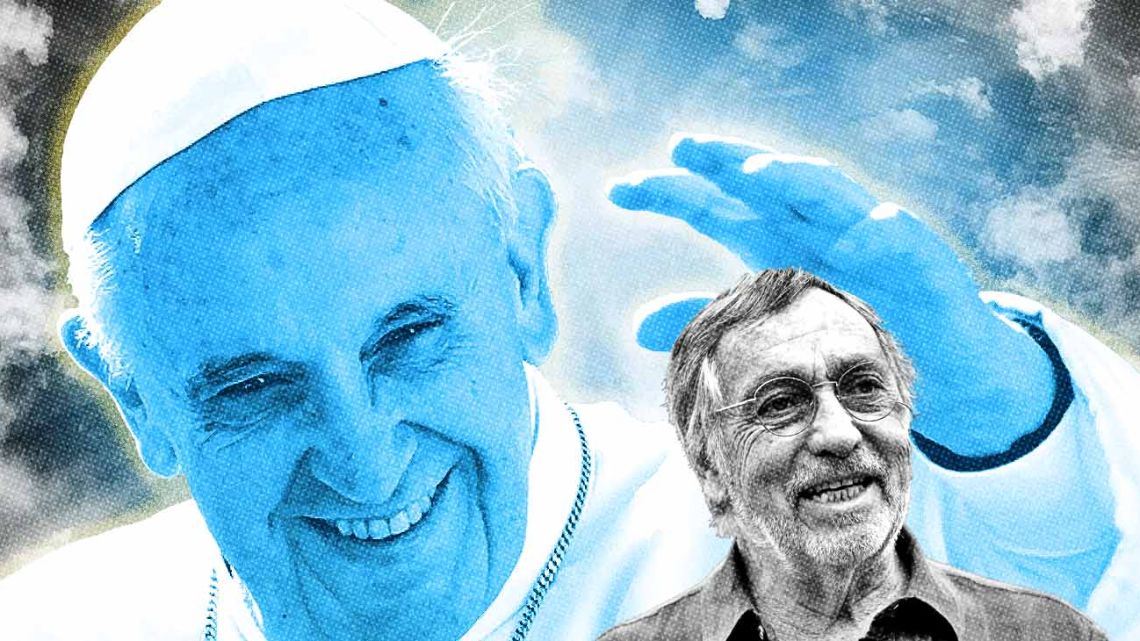
Every now and then death is larger than life in Argentina with the first two days of this week a case in point – not only the anticipated anniversary of the passing of Pope Francis last Tuesday but the loss of two entertainment greats named Luis (Brandoni and Puenzo) on consecutive days. Striking the importance attached here to lives ending – thus the dates of the deaths of founding fathers José de San Martín and Manuel Belgrano are both public holidays while few enough people could tell you when they were born.
Easy enough to be cynical about the morbid – thus Tomás Eloy Martínez, author of Santa Evita chronicling the odyssey of Eva Perón’s corpse, concluded: “Necrophilia is a typically Argentine disease.” Nor are the fulsome tributes always true to either their subject or object, sometimes turning the famous Shakespeare quote on its head to read: “The good that men do lives after them;/The evil is oft interred with their bones.” Yet at the end of the day (or days in the case of the departed) the custom of paying tribute to the dead deserves to be hailed positively amid all the human imperfections.
With all due respect for Puenzo (who won Argentina’s first Hollywood Oscar at almost the exact midpoint of his life in 1986), the loss of Brandoni made the bigger impact with a far wider range of tributes and media coverage. The general drift of those tributes was that he was a great actor equally comfortable with drama and comedy who interpreted and portrayed the Argentine soul like no other but most friends and colleagues uttering this praise allowed it to speak for itself. Despite having seen only 11 of his 59 films, this columnist will now try and spell it out.
Out of these 11 films, two roles in particular stick in the memory, both sharing the same name but a total contrast in character – Antonio Soto in La Patagonia rebelde and Antonio Musicardi in Esperando la carroza (as it happens, Brandoni also played one Antonio Fontana in La odisea de los giles, made when he was almost 80, but that role has less identity, merging into a group of neighbours fighting financial fraud).
Whereas Musicardi is a walking stereotype of middle-class opportunism, Soto was a real person – if President Javier Milei likes to describe himself as an anarcho-capitalist, Antonio Soto (1897-1963) was an anarcho-syndicalist. While Argentines have long called all Spaniards “gallegos,” Soto really came from Galicia (Ferrol). And if a youthful Brandoni (playing the role only a few years after Che Guevara) gave it the revolutionary glamour of those times, Soto does seem to have been a charismatic character – a soldier in Morocco and actor even before organising the Sociedad Obrera union in Santa Cruz at the tender age of 23, the self-educated anarchist was the driving force behind the Patagonian rebellion of 1920-1921 when general strikes escalated into the mass seizure of estancias by armed columns of hundreds of workers (hundreds of whom were later executed).
While the Patagonian rebellion occurred within several decades of constitutional rule, Esperando la carroza was made in 1985, just after half a century of military-civilian alternation (1930-1983) ended. The only wealthy member of the family, Antonio Musicardi is a corrupt, totally self-centred opportunist joining the “financial fatherland” and making a fortune – less out of skilfully playing economic volatility, one suspects, than through contacts (including top police brass in and out of prison due to their dictatorship past). He shows a conventional respect for family life but his hypocrisy is exposed in the famous “tres empanadas” scene when he emerges from his impoverished sister’s house eating one of them while deploring poverty.
It is thus one small measure of Brandoni’s skill that he can incorporate the youthful idealism of one and the despicable arrogance of the other so convincingly, portraying two totally different men in very different times and contexts.
As it happens, one of Brandoni’s infinitely many roles was as a Padre Francisco in the 2011-2012 Juan José Campanella television series El hombre de tu vida starring Guillermo Francella (like almost everything else), winding up just the year before Cardinal Jorge Bergoglio became Pope Francis – this brings us to Tuesday’s anniversary.
The passage of a year has been kind to the memory of Bergoglio with the friction over the “Peronist Pope” starting to fade into the past while the more purely religious side was recalled – even if more recent differences reared their ugly and petty head with Acting President Victoria Villarruel (during Milei’s sojourn in Israel) steering clear of the controversial Cabinet Chief Manuel Adorni at the memorial mass in Luján basilica. In point of fact the “Peronist Pope” accusations against Francis are unjustified because reading the New Testament will show that he had little choice but to preach a social gospel. Demanding otherwise would be almost as absurd as President Donald Trump’s exasperation with his successor Leo XIV over pleading for peace – what else does he expect? On a par with criticising the Pope for being Catholic.
But while The Bible would have pushed Francis in that direction in any event, there could be reason to believe that it was the Antonio Musicardis of his native country who drove Bergoglio even further. The Brandoni character reflects an Argentine upper class with greater indifference to inequality and lower social sensitivity than their counterparts elsewhere, some honourable exceptions aside. One voice at a luncheon club attended by this columnist repeatedly insists that a key difference between the United States and Argentina is that while up there has a long tradition of churches and other charities filling the social gaps and thus allowing capitalism to go about its amoral but invaluable work of creating wealth almost undiluted, down here that flank is left uncovered – something which Milei will have to correct, in his opinion, if he is to succeed.
related news
COMENTARIOS